
Kailasa Temple Photography Guide
The monument rewards slow framing: a wide courtyard view, the vertical rock-cut facades and the sculpted panels each need a different position and light.
Google Maps ↗ ASI source listing ↗
Independent guide · Page reviewed 9 November 2026 · ASI listing consulted 2026-10-29
Kailasa Temple (Cave 16) is one monument within the UNESCO-listed Ellora Caves. Prices, opening status and routes are dated listings to re-check, not live confirmations.
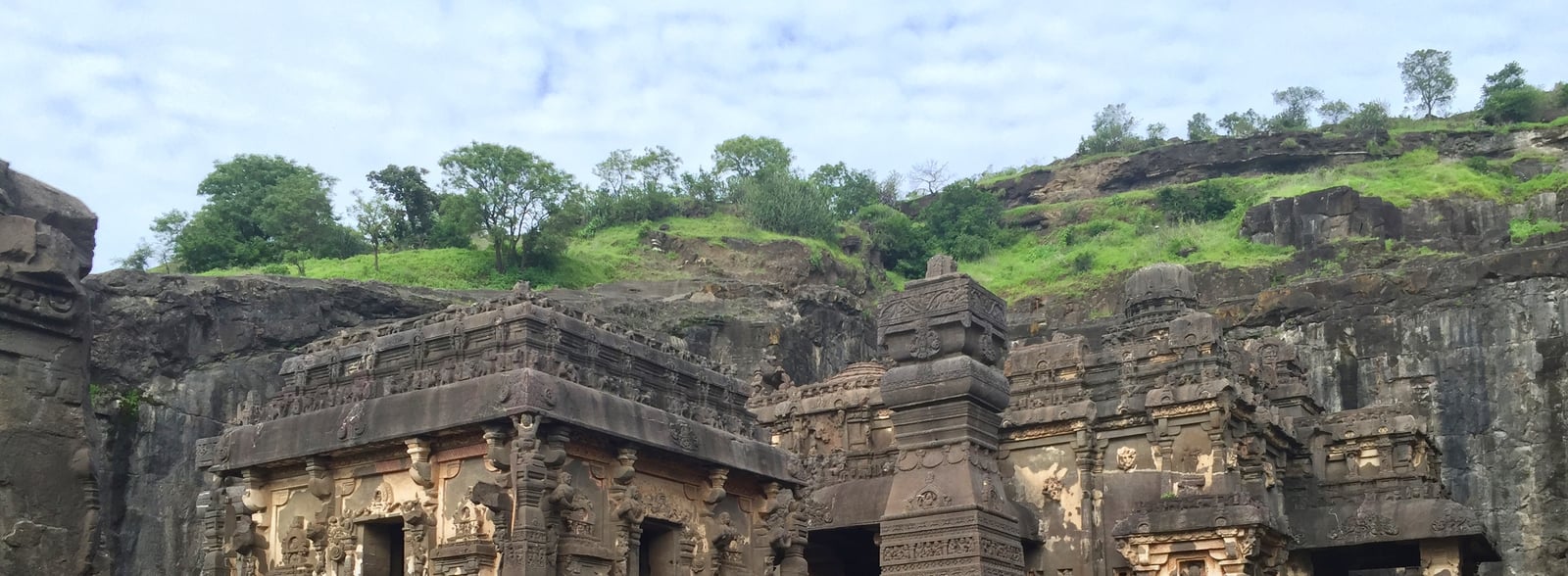
What the published photograph shows
The photograph used across this site is a 2016 image by Ms Sarah Welch, cropped to the upper 3264 × 1200 area of the original 3264 × 2448 frame. It shows historical upper architectural detail, not the full monument and not evidence of present-day conditions.
The crop deliberately excludes the lower visitor areas. Derivatives retain CC BY-SA 4.0; photographer credit does not imply endorsement or grant additional subject rights. The original published images are kept unchanged.
Angles worth planning for
Work from the general to the specific rather than repeating one wide frame. Because the temple was excavated from a single rock mass, the depth of the courtyard and the vertical faces are the strongest compositional features.
- Courtyard: step back to include the full excavated volume and the surrounding rock walls.
- Upper facades: the cropped historical photograph shows how strongly the upper carved storeys read against the sky.
- Sculpted panels: UNESCO singles out the Ravana shaking Mount Kailasa scene; frame it as narrative relief, not as a historical record.
- Painted traces: UNESCO also notes painting remains on the ceiling of the front mandapa; check current viewing and photography conditions before attempting detail shots.
Light, rules and respect
Oblique light early or late in the day tends to reveal carving depth better than flat midday sun, but the ASI sunrise-to-sunset visiting window sets the limits. Do not plan shots outside permitted admission hours.
Confirm current rules on tripods, professional equipment, commercial filming, flash and drones with ASI. This guide grants no permission. Respect worshippers, keep out of closed areas, and never touch or climb carvings.
Photography conditions and restrictions change; verify on site. Reviewed 9 November 2026.
Frequently asked questions
Are drones allowed at Kailasa Temple?
Do not assume so. Confirm current drone, tripod and professional-equipment rules with ASI; this guide cannot grant permission.
When is the best light?
Softer oblique light near the start or end of the visiting window generally shows relief better, but opening hours and local rules take priority.
Can I use the photos on this site?
The historical photograph is a CC BY-SA 4.0 derivative with its own credit and licence terms. Check the photograph and licence section on the home page before any reuse.
Sources and review limits
Page reviewed 9 November 2026. The ASI Ellora Caves page was consulted 2026-10-29; that review is not an on-site inspection, and no clear page-update date was visible on the ASI listing. A Google Maps snapshot or a UNESCO property coordinate is not a verified entrance, ticket counter or accessibility survey.
- Archaeological Survey of India: Ellora Caves — identity, historical attribution, listed opening hours and admission categories.
- UNESCO World Heritage Centre: Ellora Caves — the 1983 inscription, the ensemble and its artistic significance.
- ASI official ticket service — check the actual visit date, eligibility and current charge.
- Google Maps: Kailasa Temple — dated manual snapshot, not site-collected reviews.
No business name, price, timetable, distance, star rating or review score is published here without verification. Temporary closures, conservation work and special orders may override any general listing.