
Sculptures and Carvings of Kailasa Temple
The carving is not applied ornament. In a monolithic excavation, sculptural panels and architectural faces are cut from the same rock mass as the shrine itself.
Google Maps ↗ ASI source listing ↗
Independent guide · Page reviewed 9 November 2026 · ASI listing consulted 2026-10-29
Kailasa Temple (Cave 16) is one monument within the UNESCO-listed Ellora Caves. Prices, opening status and routes are dated listings to re-check, not live confirmations.
Subjects and where to look
The temple is dedicated to Shiva, and its sculptural programme draws on Shaiva narratives. UNESCO singles out the panel showing Ravana attempting to lift Mount Kailasa, one of the best-known scenes at the site.
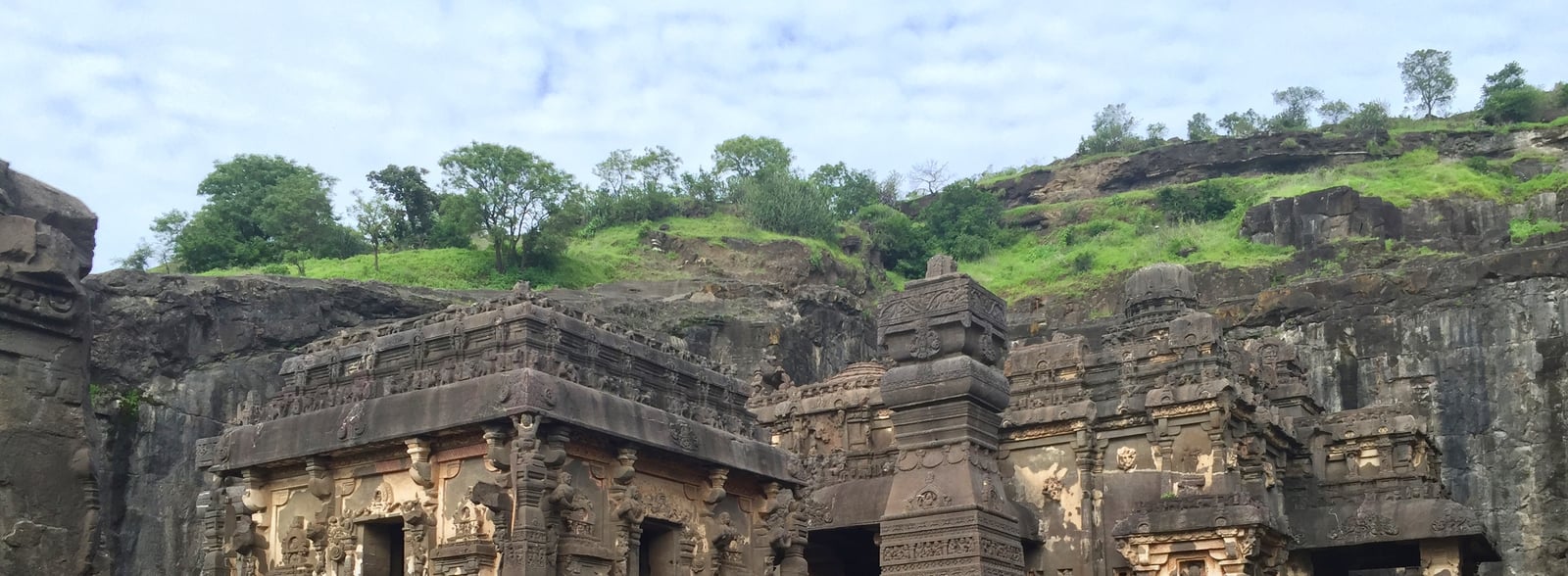
The upper carved facades are visible in the 2016 historical photograph used on this site, which is cropped to the upper architectural detail rather than the whole monument.
- Narrative relief panels: episodes from Shaiva tradition, carved into the architecture.
- Upper facades: carved architectural storeys that read as built forms but are rock-cut.
- Front mandapa ceiling: UNESCO records traces of painting.
- Courtyard faces: sculpture and architecture share one continuous rock surface.
Art is not a chronicle
A relief of Ravana shaking Mount Kailasa is an artistic treatment of a religious story. It should be read as iconography and devotional expression, not as evidence that an event took place or as a dated construction record.
This guide also avoids detailed identifications of every figure where the sources reviewed do not support them. For a fuller reading, the ASI and UNESCO records are the appropriate starting points.
Looking responsibly
Never touch, lean on or climb carved surfaces, and keep out of closed areas. Check current photography rules with ASI before using a tripod or close-up lighting, and be considerate of worshippers at a living religious monument.
Reviewed 9 November 2026. Sources: UNESCO Ellora Caves property record and the ASI Ellora Caves page.
Frequently asked questions
What is the most famous sculpture at Cave 16?
UNESCO specifically highlights the scene of Ravana attempting to lift Mount Kailasa.
Are there paintings inside the temple?
UNESCO notes traces of painting on the ceiling of the front mandapa. Current viewing conditions should be confirmed with ASI.
Can visitors touch the carvings?
No. Avoid touching or climbing carvings, respect religious imagery and stay out of closed areas.
Sources and review limits
Page reviewed 9 November 2026. The ASI Ellora Caves page was consulted 2026-10-29; that review is not an on-site inspection, and no clear page-update date was visible on the ASI listing. A Google Maps snapshot or a UNESCO property coordinate is not a verified entrance, ticket counter or accessibility survey.
- Archaeological Survey of India: Ellora Caves — identity, historical attribution, listed opening hours and admission categories.
- UNESCO World Heritage Centre: Ellora Caves — the 1983 inscription, the ensemble and its artistic significance.
- ASI official ticket service — check the actual visit date, eligibility and current charge.
- Google Maps: Kailasa Temple — dated manual snapshot, not site-collected reviews.
No business name, price, timetable, distance, star rating or review score is published here without verification. Temporary closures, conservation work and special orders may override any general listing.