
Ravana Shaking Mount Kailasa Sculpture
UNESCO singles out this relief when describing the Ellora Caves. It is one of the most recognisable sculptural images at Cave 16 and a good example of narrative carving.
Google Maps ↗ ASI source listing ↗
Independent guide · Page reviewed 9 November 2026 · ASI listing consulted 2026-10-29
Kailasa Temple (Cave 16) is one monument within the UNESCO-listed Ellora Caves. Prices, opening status and routes are dated listings to re-check, not live confirmations.
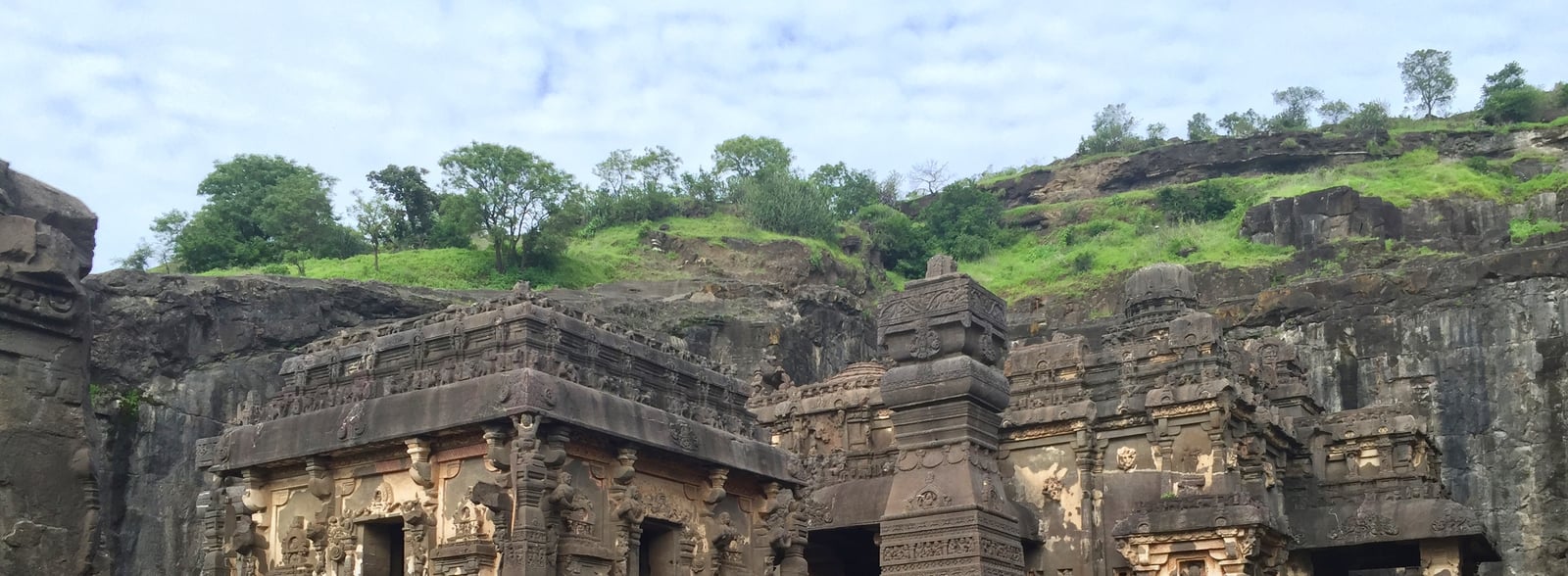
What the panel depicts
The scene shows Ravana attempting to lift or shake Mount Kailasa, the abode of Shiva. In the Shaiva narrative the mountain is steadied by Shiva, and the episode becomes an image of divine power rather than a record of a battle.
UNESCO highlights this sculpture in its description of the property, which is why it is a reliable starting point for interpreting Cave 16’s sculptural programme.
How to read it as rock-cut art
In a monolithic excavation, a narrative panel is carved from the same basalt mass as the surrounding architecture. Composition, depth of relief and the framing of figures all have to be resolved before the surrounding rock is removed.
Compare the panel with the carved upper facades shown in the historical photograph on this site: both depend on controlling depth across a continuous rock surface.
Art, legend and evidence
Religious narrative and documented history answer different questions. The panel tells us about Shaiva imagery and the ambitions of the sculptural programme; it does not establish a literal event or a construction date.
Look responsibly: do not touch or climb carvings, stay out of closed areas, and confirm current photography conditions with ASI.
Reviewed 9 November 2026. Primary reference: the UNESCO Ellora Caves property record.
Frequently asked questions
Where is the Ravana panel?
It is part of the sculptural programme of Kailasa Temple, Cave 16, at the Ellora Caves. Confirm which areas are currently open with ASI.
Why is this sculpture singled out by UNESCO?
UNESCO specifically mentions the scene of Ravana attempting to lift Mount Kailasa in its description of the property’s artistic significance.
Does the panel show a real event?
No. It is an artistic expression of a Shaiva narrative, not evidence of a literal historical event.
Sources and review limits
Page reviewed 9 November 2026. The ASI Ellora Caves page was consulted 2026-10-29; that review is not an on-site inspection, and no clear page-update date was visible on the ASI listing. A Google Maps snapshot or a UNESCO property coordinate is not a verified entrance, ticket counter or accessibility survey.
- Archaeological Survey of India: Ellora Caves — identity, historical attribution, listed opening hours and admission categories.
- UNESCO World Heritage Centre: Ellora Caves — the 1983 inscription, the ensemble and its artistic significance.
- ASI official ticket service — check the actual visit date, eligibility and current charge.
- Google Maps: Kailasa Temple — dated manual snapshot, not site-collected reviews.
No business name, price, timetable, distance, star rating or review score is published here without verification. Temporary closures, conservation work and special orders may override any general listing.